Interactive Map
From Tiszabogdány to Los Angeles
An interactive map of five journeys. Zoom, pan, and open any marker to read what places it there. Every site is placed from a record or from testimony.
Interactive Click any pin for the record behind it. Drag to move, scroll to zoom, open the timeline index, and switch on a single person’s path.
Every pin opens the record that places it, with a link to the spot on Google Maps. Open the map full screen.
Budapest is the centre of this map, because Helen was sent there in late 1943 and it is the reason she lived: the household she was left with, the yellow-star house, the route of the march. But it reaches well past the city in both directions: out to the village on the Tisza, to the ghetto and the transport, to the camps and the subcamps, to the roads Tibi and Eva were marched along, and then through the displaced-persons camps to the ship in 1947 and the cities that came after.
The map draws five routes. Helen’s own, from the village to Budapest and then through the displaced-persons camps to the ship in 1947. Her mother Roza’s, from Bohdan to the Mátészalka ghetto and Auschwitz. Her cousins Michal and Lajos, who went through Auschwitz and Buchenwald and came back. And two from the family she married into: Tibor Katz, from Szatmár in Transylvania, who survived a death march out of Budapest under the Arrow Cross, and his niece Eva. He and Helen lost their families separately and did not meet until long afterwards, in Los Angeles, where they married in the 1960s.
Everything else on this site concerns Helen’s own family: the Helmans, the Landós and the Sperbers. The map is the one place where her husband’s family appears alongside them. The photograph of Kloster Indersdorf is by H. Helmlechner, used under CC BY-SA 4.0; every other image on this site is a family document or a family photograph.
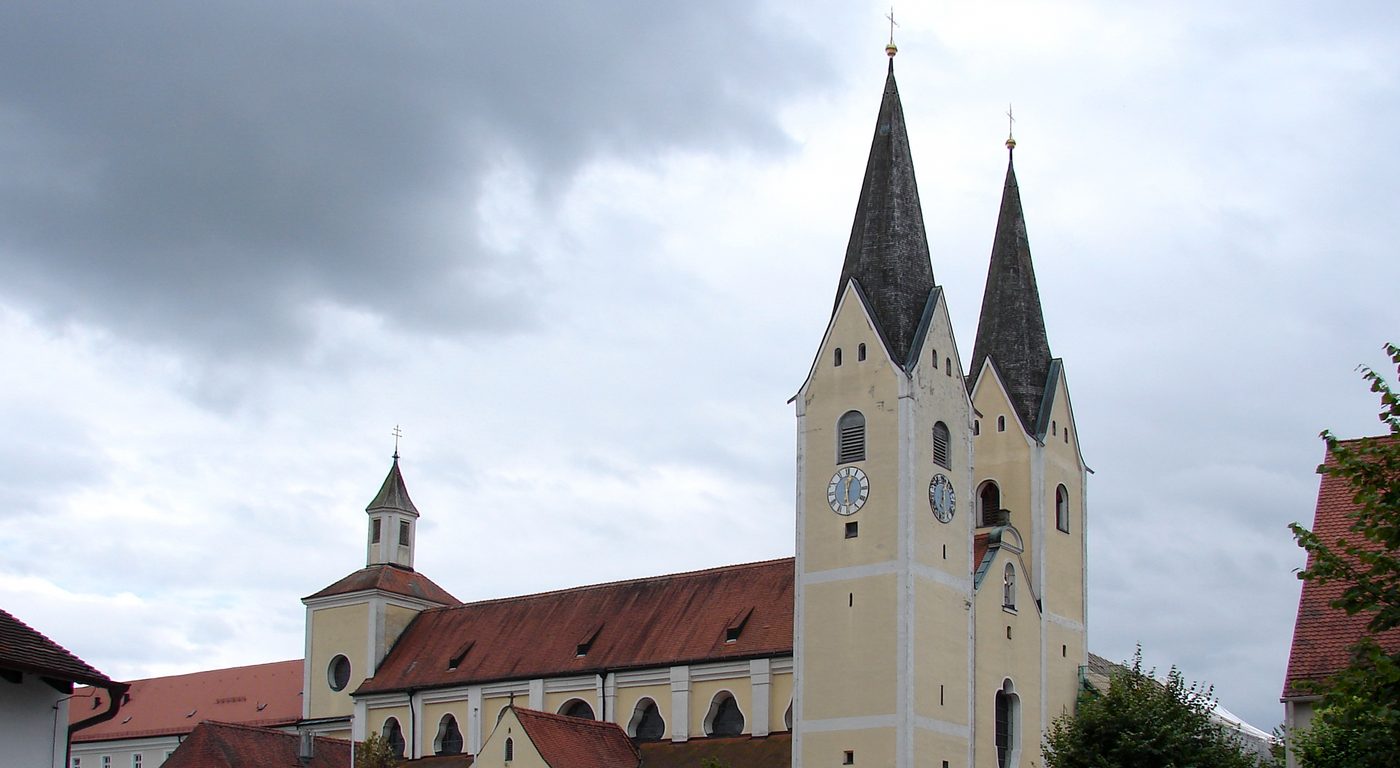
The children’s centre is where the postwar half of Helen’s route becomes documented again. She appears in the Indersdorf records, then at Prien am Chiemsee, then on a sponsorship file, then on a passenger list. Five places, four archives, one girl.
It is also where the only photograph we have of her from those years was taken, standing with her friend Ibi Weinberger.
An address is only on this map if a document put it there: a registration card, a directory entry, a deportation record, a testimony that names the street. Where the record gives a building and the family memory gives a different one, both are noted rather than reconciled.