The Researcher

Their names are in the records. I connect them to their families.

Millions of Holocaust-era records are online, and the people in them are scattered across archives, in a dozen languages, under spellings their own families wouldn’t recognize. I link each record to the right person, and each person to the family still looking for them, and I teach families and institutions to do the same.

Now AI can help read them, and the children of survivors are still here to say who people were.

The handout, to print (PDF)

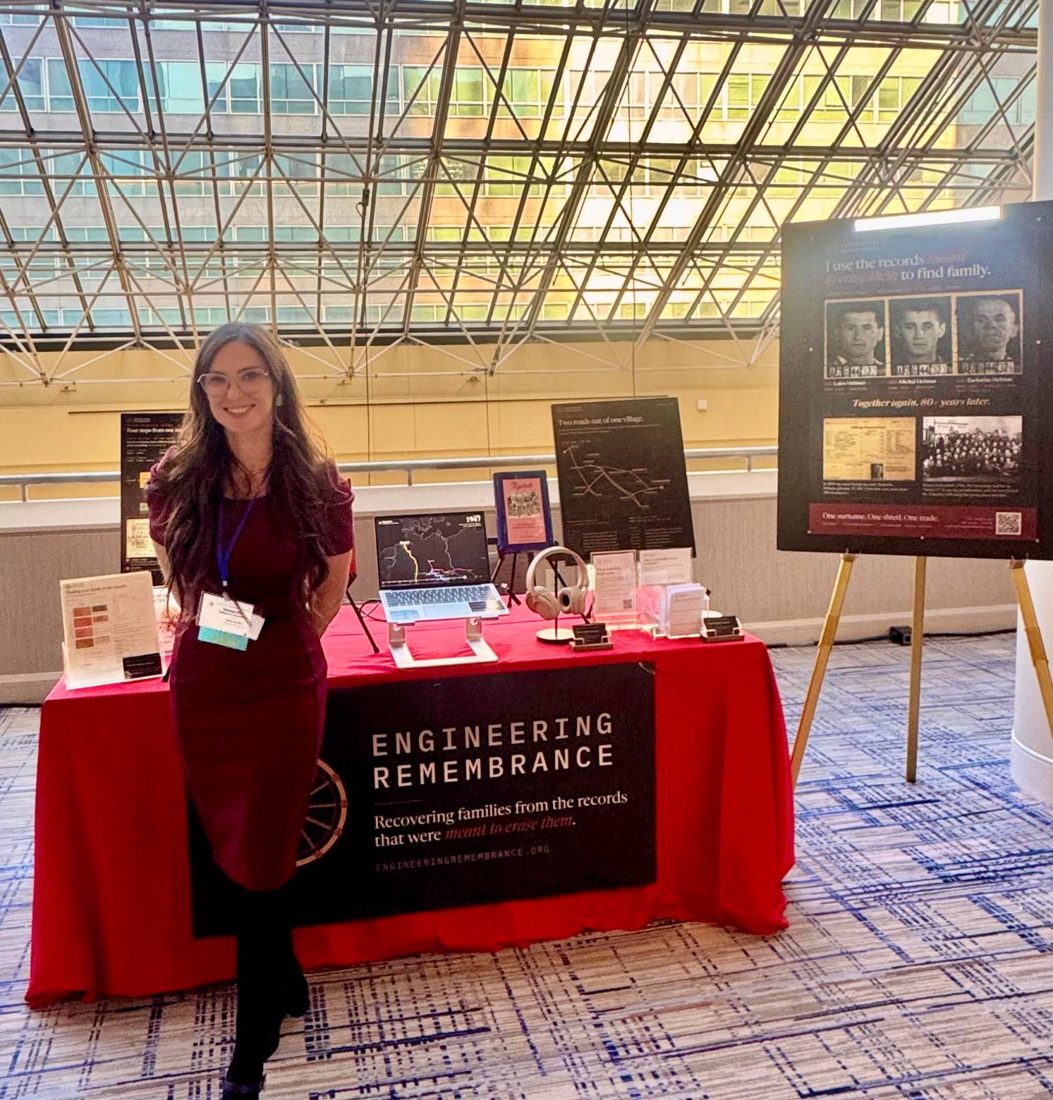
Sam at the Engineering Remembrance table, Philadelphia, October 2026
At my table. Both in Philadelphia, October 2026.
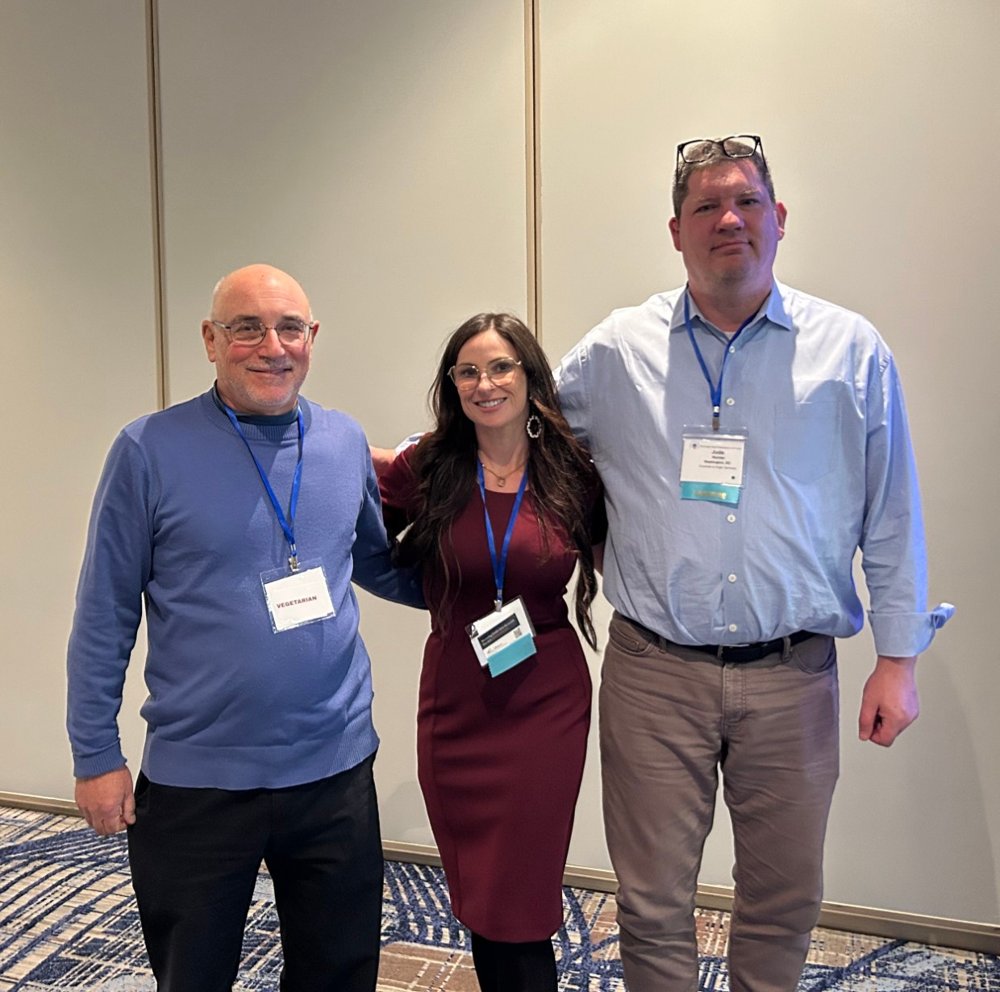
Dan Schwarz, Sam and Jude Richter after the workshop, Philadelphia, October 2026
After our workshop: Dan Schwarz, me and Jude Richter (USHMM).
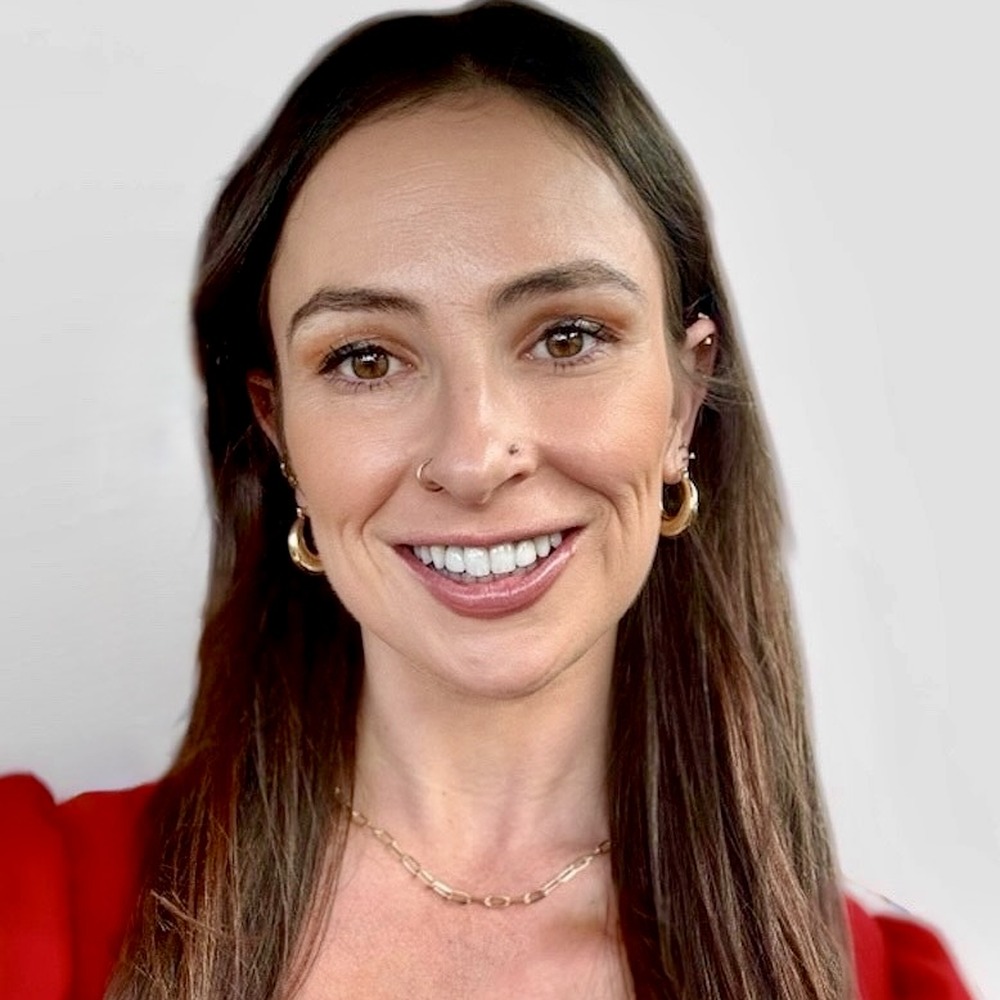
Samantha Seligman-Grajewski

Samantha Seligman-Grajewski

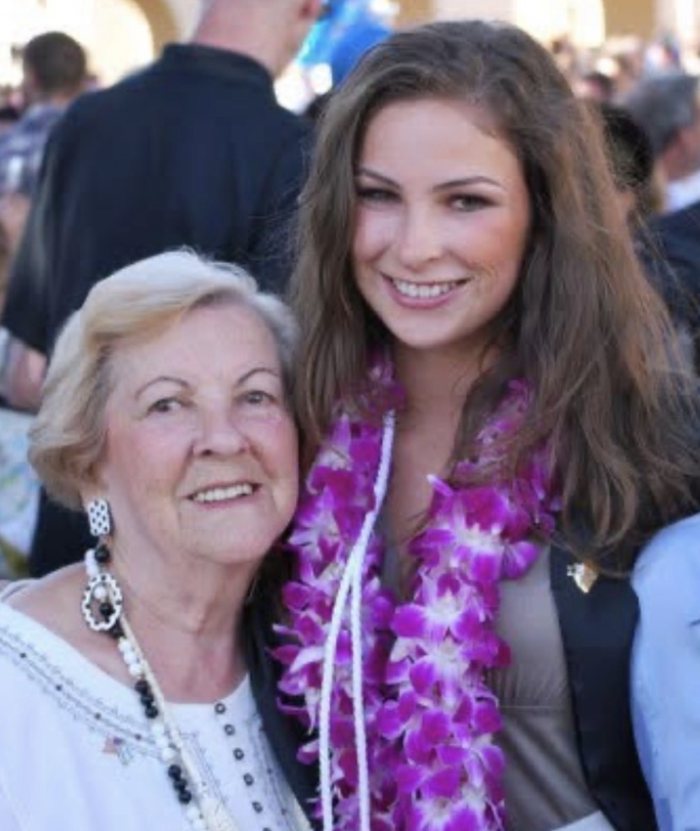
Third generation. Granddaughter of Helen Lando Helman of Tiszabogdány. Founder of Engineering Remembrance.

I work in process engineering and am completing an M.S. in Chemical Engineering at Stanford. I had no training in Holocaust research or genealogy when I started, and I still have none. What I had was a way of thinking about systems, and a grandmother whose family had been reduced to a village name and a handful of first names.

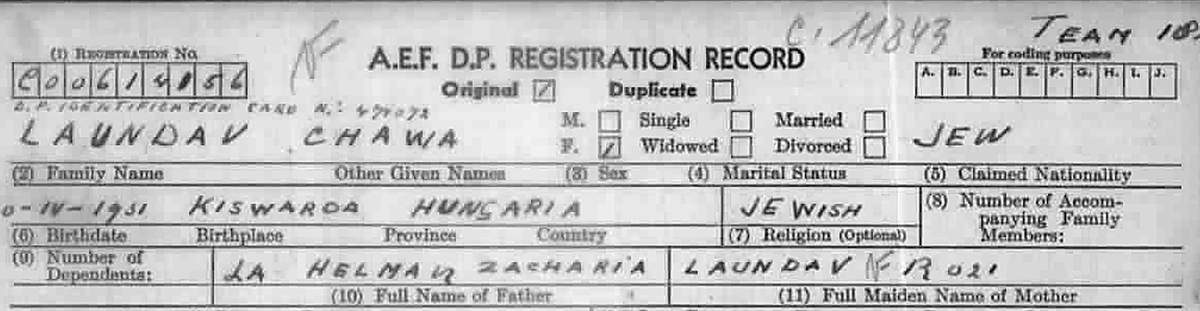
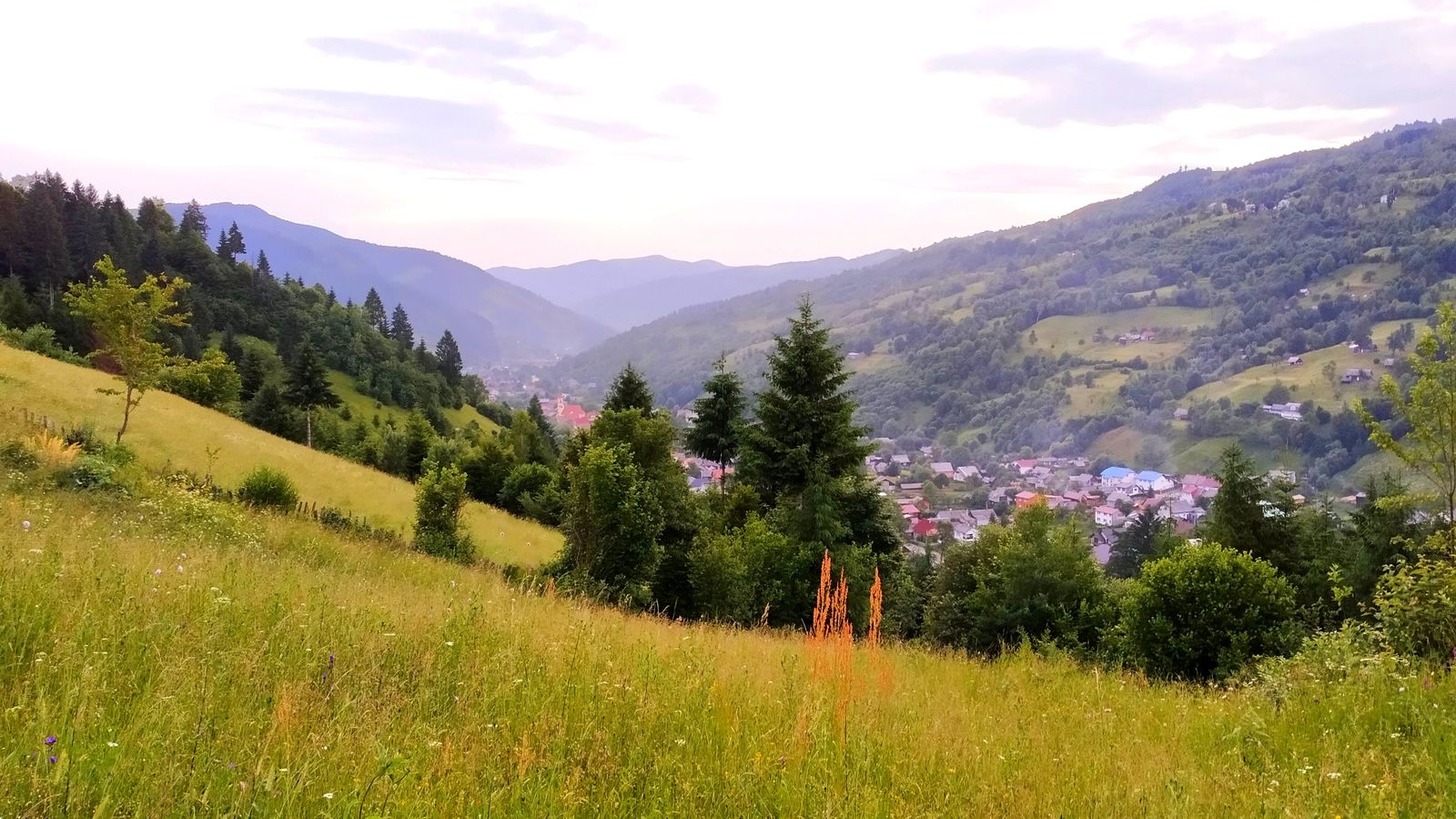
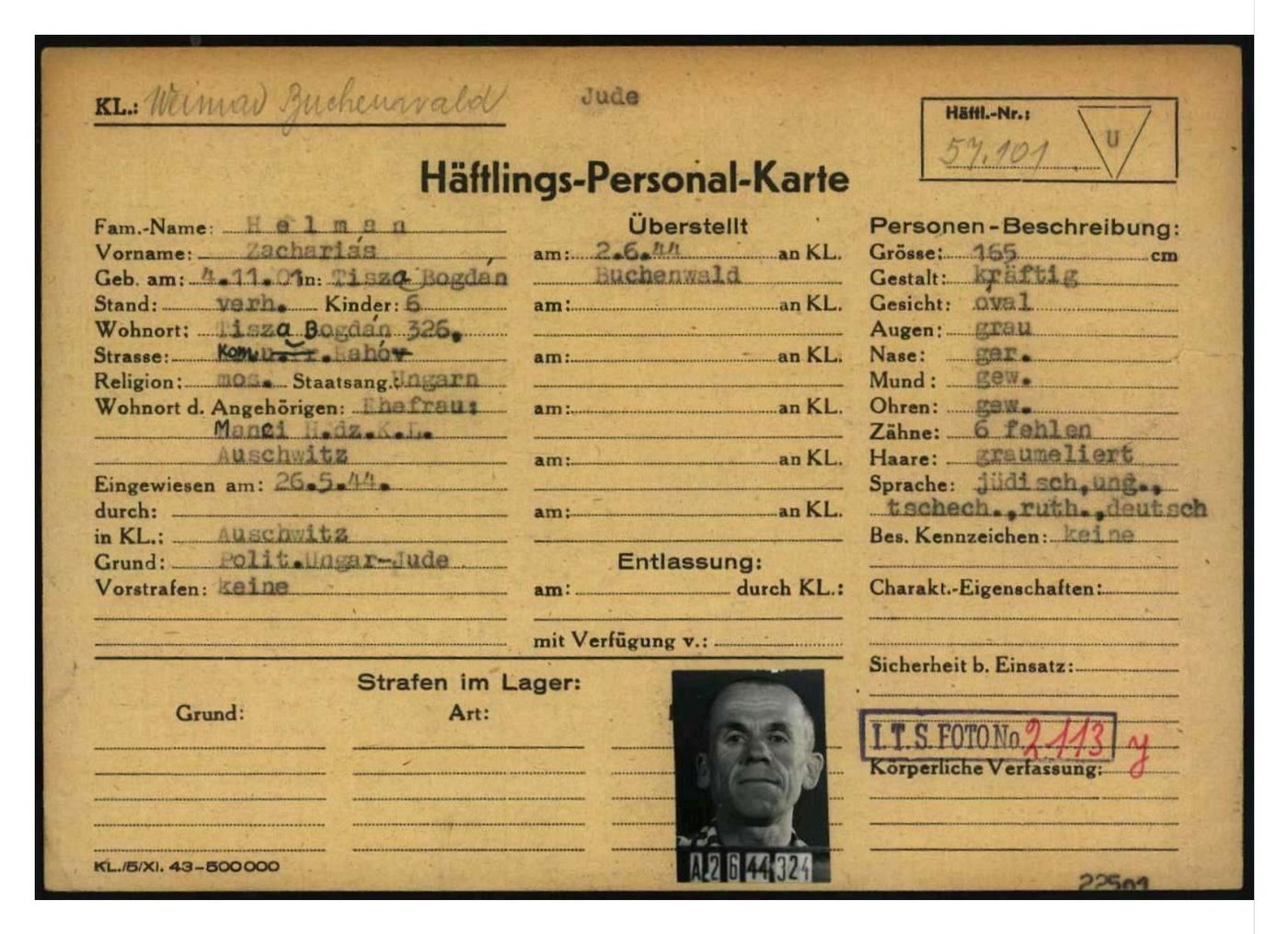
For most of my life we had nothing of Helen’s family. No photograph, no grave, no date. The family held one Buchenwald prisoner card for her father, which only reached us in 2019, when the Arolsen Archives put their holdings online, and assumed that was the end of what could be known. Helen’s story is on the home page.

Helen and my grandfather Tibi Katz helped raise me. Helen was a super grandma: she was happiest with her grandchildren, and she was the kindest, best person I have ever met. I chose UCLA for my undergraduate degree so I would never be far from them, and when Helen died, I moved in with Tibi and lived with him until he died. He was my favorite roommate. You would never have known what either of them had been through. Helen would tell anyone; that’s why she spoke at schools. Tibi didn’t talk about the war the way she did, but eventually he opened up to me.

I started looking properly in 2026. I do this research from Hawai‘i, about as far from Europe as you can get. I speak only English. The records are in Hungarian, Czech, German, Russian, Yiddish, Hebrew and more, so I use AI to help me read and translate them, and then I check what it tells me against the page.

Record linkage is a data problem: names that drift across languages, dates that don’t agree, one person split across twenty files. Engineers take a finished thing apart to see how it was made. I do the same with a family: I reverse-engineer what happened from the records the system left behind. That’s why this is called Engineering Remembrance. If I can learn it, you can too.
What she said about me

In 2008 Helen sat for a recorded interview. Near the end, the interviewer asks about her grandchildren.

I was sixteen. I had said once, at her kitchen table, that I wanted to go to Stanford, and then I never applied. I went to UCLA instead, to stay close to them. Eighteen years later I applied to Stanford for a master’s and was admitted, and that July I listened to this tape again and heard what she had done with a passing remark from a teenager.

InterviewerYes, well what’s the other? You said you had three grandchildren?

HelenYes… Samantha.

InterviewerRight.

HelenShe is sixteen, exactly sixteen. And she, she is in school, in high school. She hopes, she hopes to go, if she makes it, she’s pretty smart, to Stanford. She would like to go to Stanford University.

Helen Lando Helman · recorded interview, 2008 · 14:55 to 15:26

What I found

One Buchenwald card became 2,008 records from 26 archives and databases, in 12 languages.

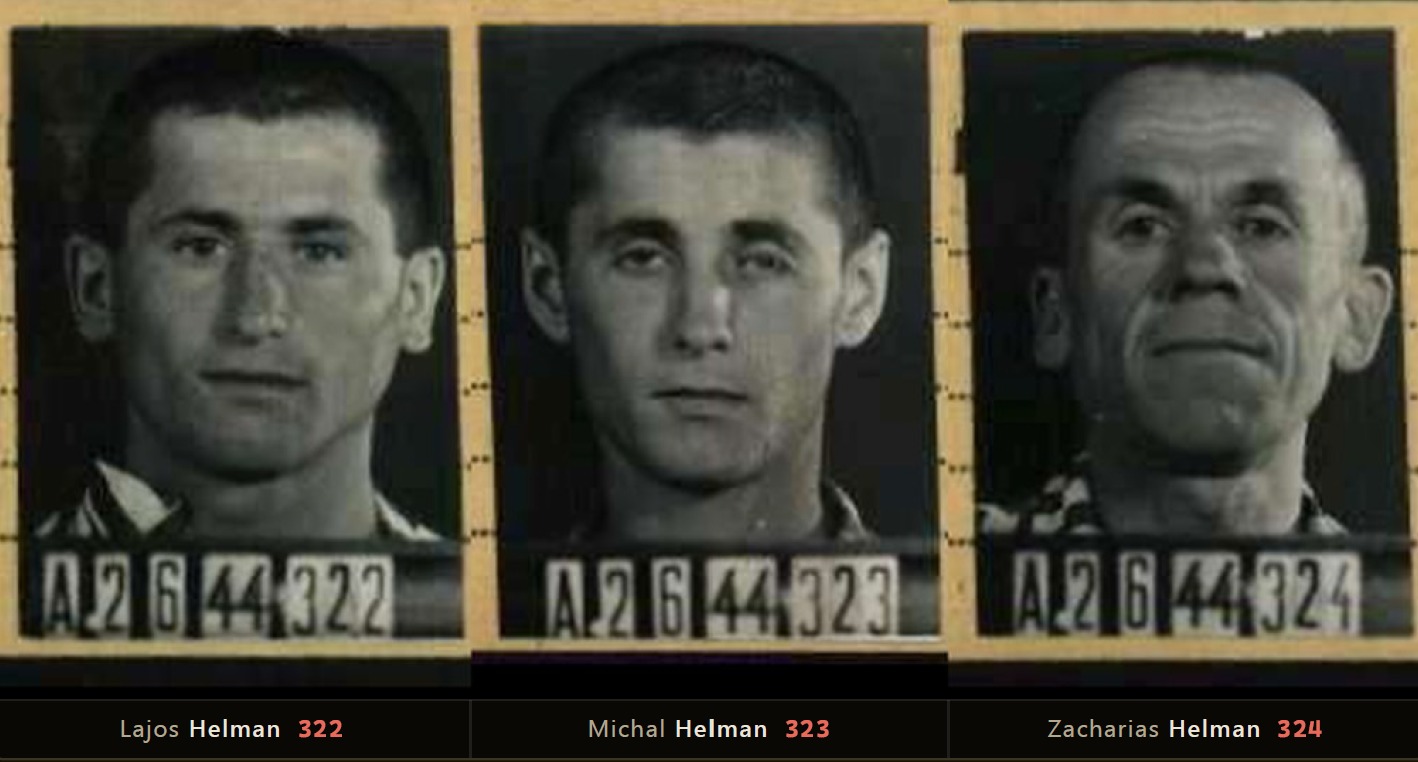
Buchenwald intake photographs of Lajos, Michal and Zacharias Helman, boards 322, 323 and 324
Three HelmansHelen’s father, Zacharias, and his nephews Lajos and Michal, photographed one after another at Buchenwald. Their cards were filed apart for more than eighty years.Arolsen Archives · Buchenwald, 2 June 1944
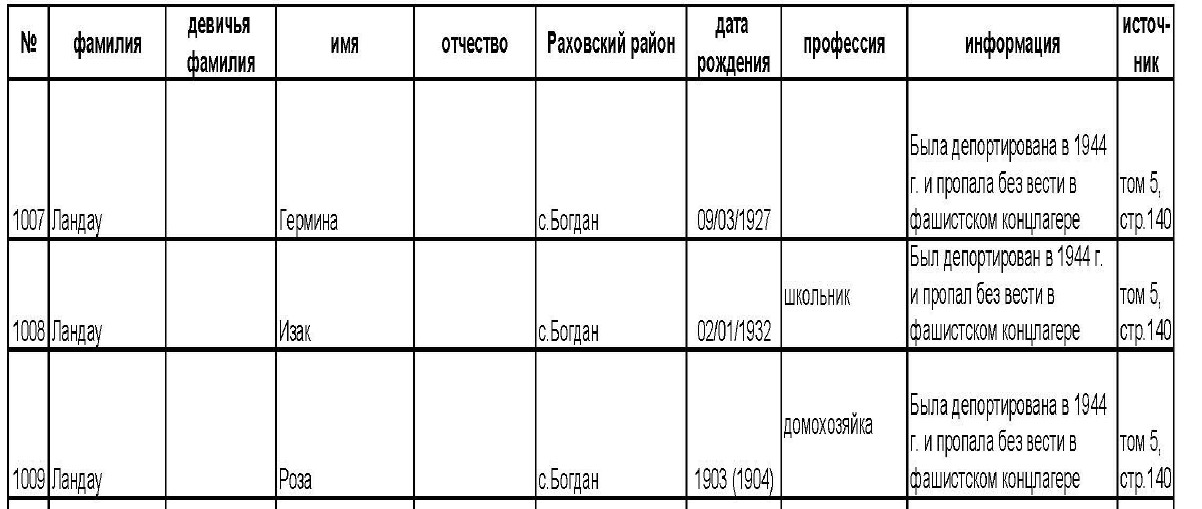
Three rows of a Yad Vashem list of the Rachov district: Landau Hermina (Hinda), Landau Izak, Landau Roza
Her mother, sister and brotherRoza, Hinda and Izak, three rows in a row, all of Bogdan: “deported in 1944 and went missing in a fascist concentration camp.”Yad Vashem · Rachov district list, p. 90, rows 1007–1009
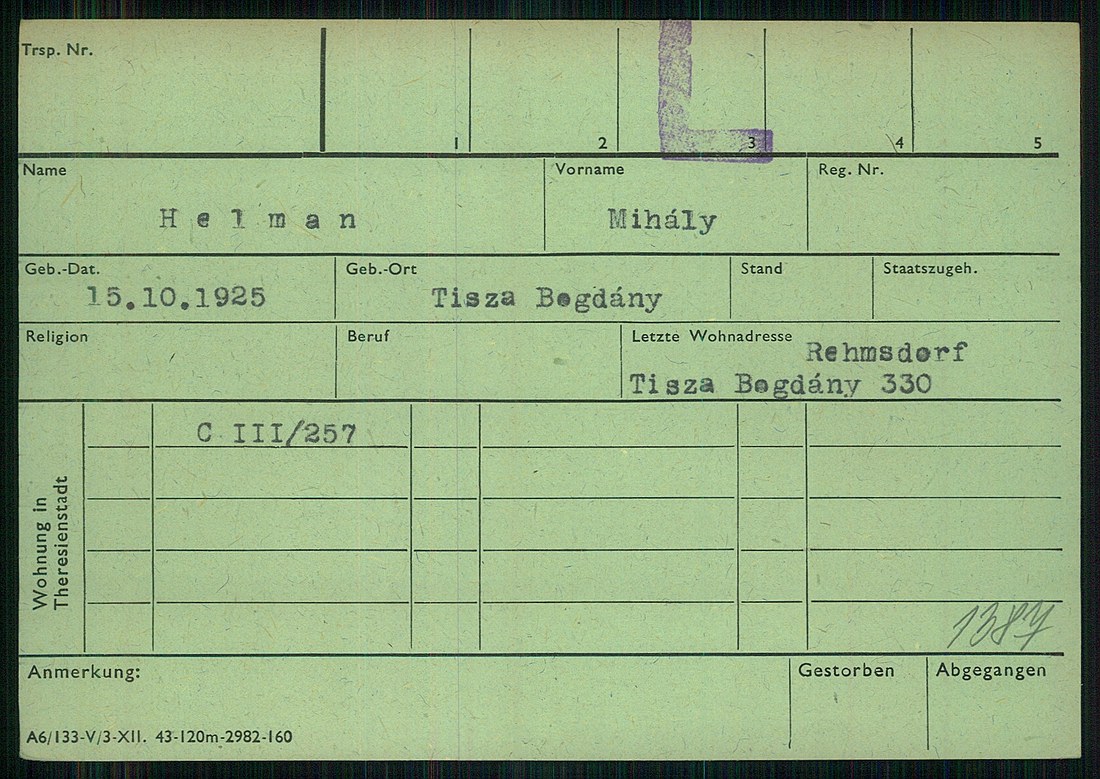
Michal Helman’s Terezín card, 1945
Two cousins who survivedMichal and Lajos lived through Rehmsdorf to Terezín. Through them, a branch of the family in Israel and the United States, back in touch after more than 80 years.Národní archiv, Prague · published with consent NA-5701-2/03-2026
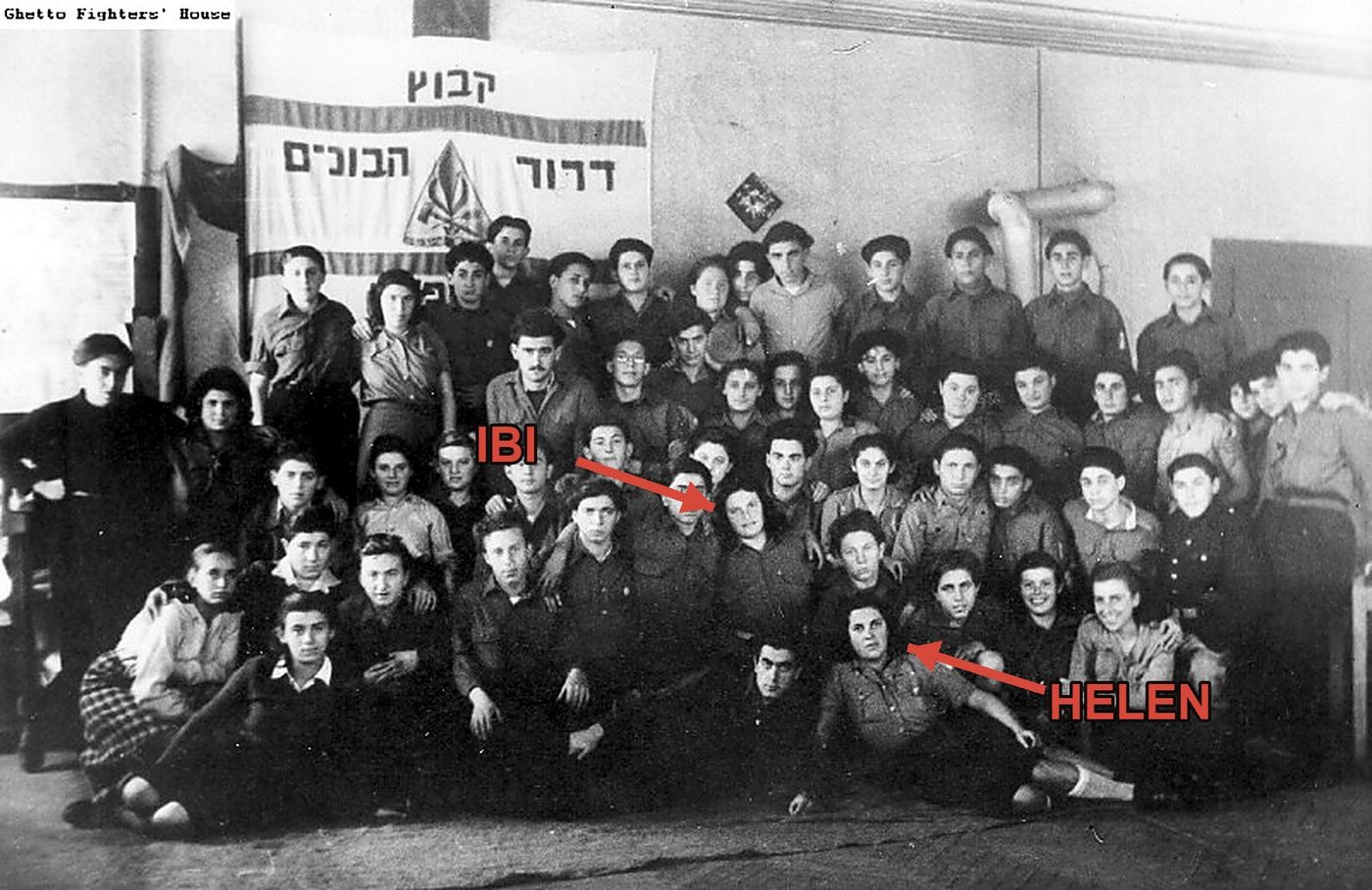
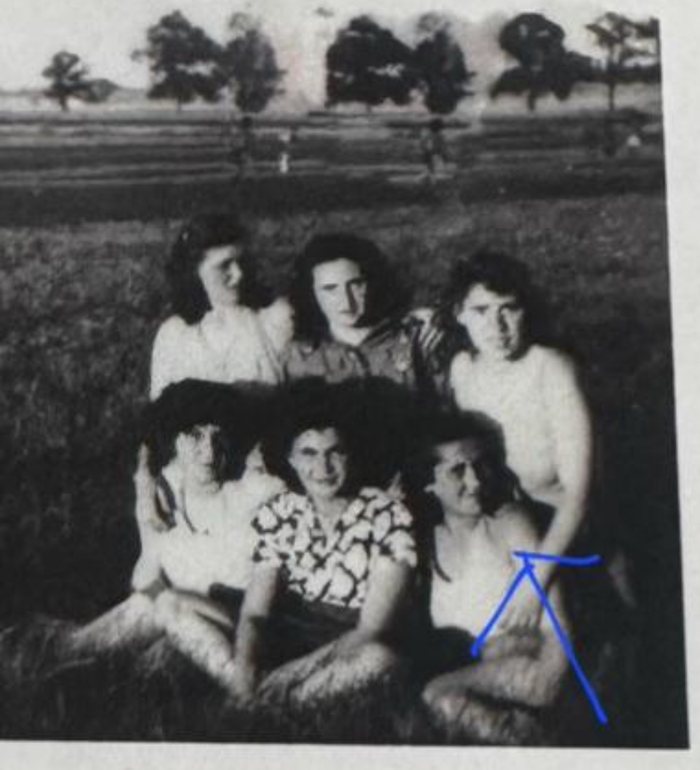
The Dror Habonim group at Indersdorf, 1946, with Helen and Ibi marked
Helen and Ibi Weinberger, found in a crowdThe historians’ captions had “Helen (?)” and “Ibi (?)”. Helen is now named and Ibi confirmed, and the historians accepted both.Ghetto Fighters’ House Archives, photo 19650 · arrows added
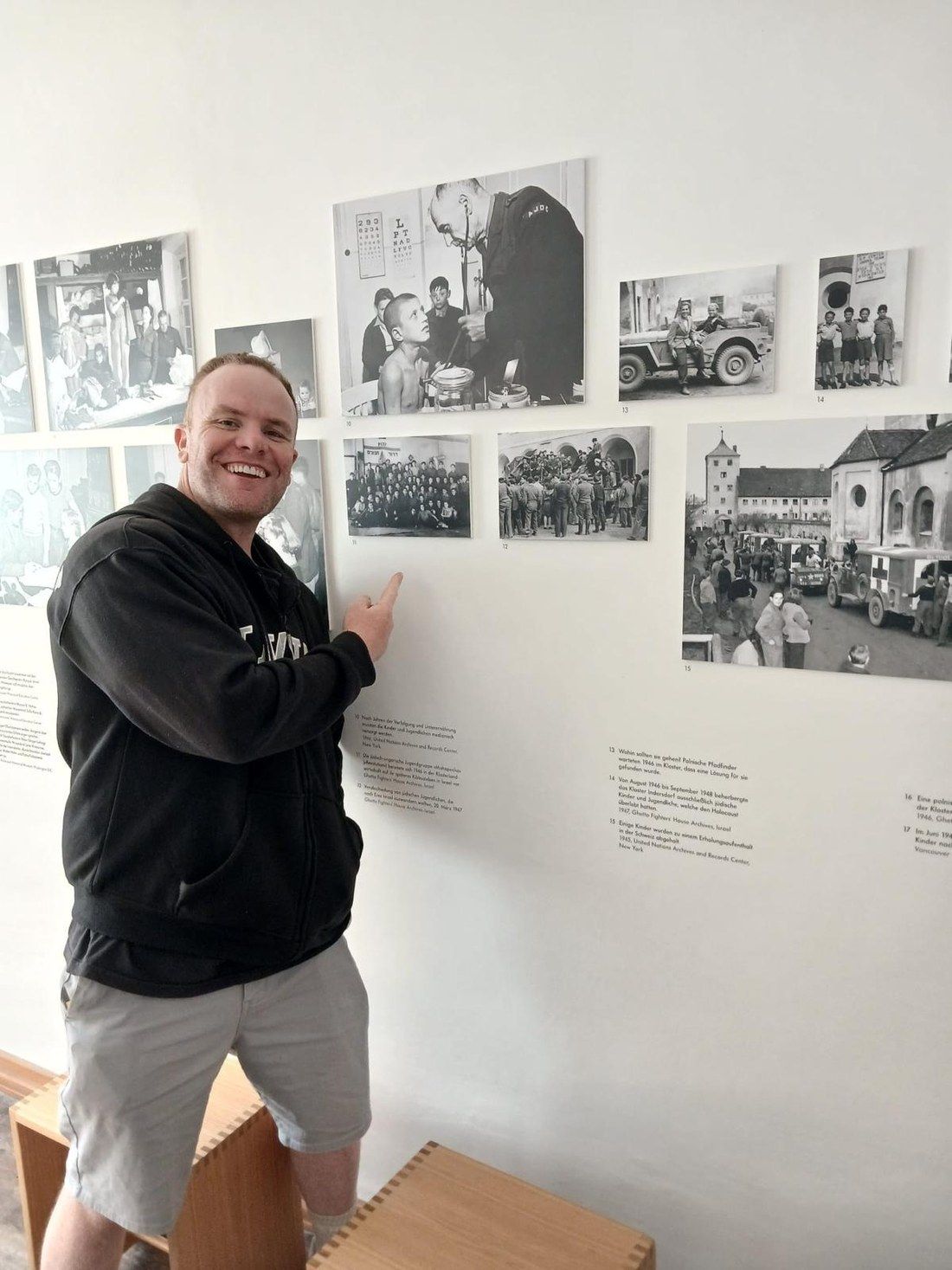
Adam, Helen’s grandson, pointing to the group photograph on the wall of the Kloster Indersdorf museum
On the wall todayMy brother Adam at the Kloster Indersdorf museum, September 2026, beside the same photograph.Kloster Indersdorf · September 2026

Every finding is shown on its document and held only where independent kinds of record agree. What is probable is labeled probable. The method is written up so anyone can repeat it.

The method, taught

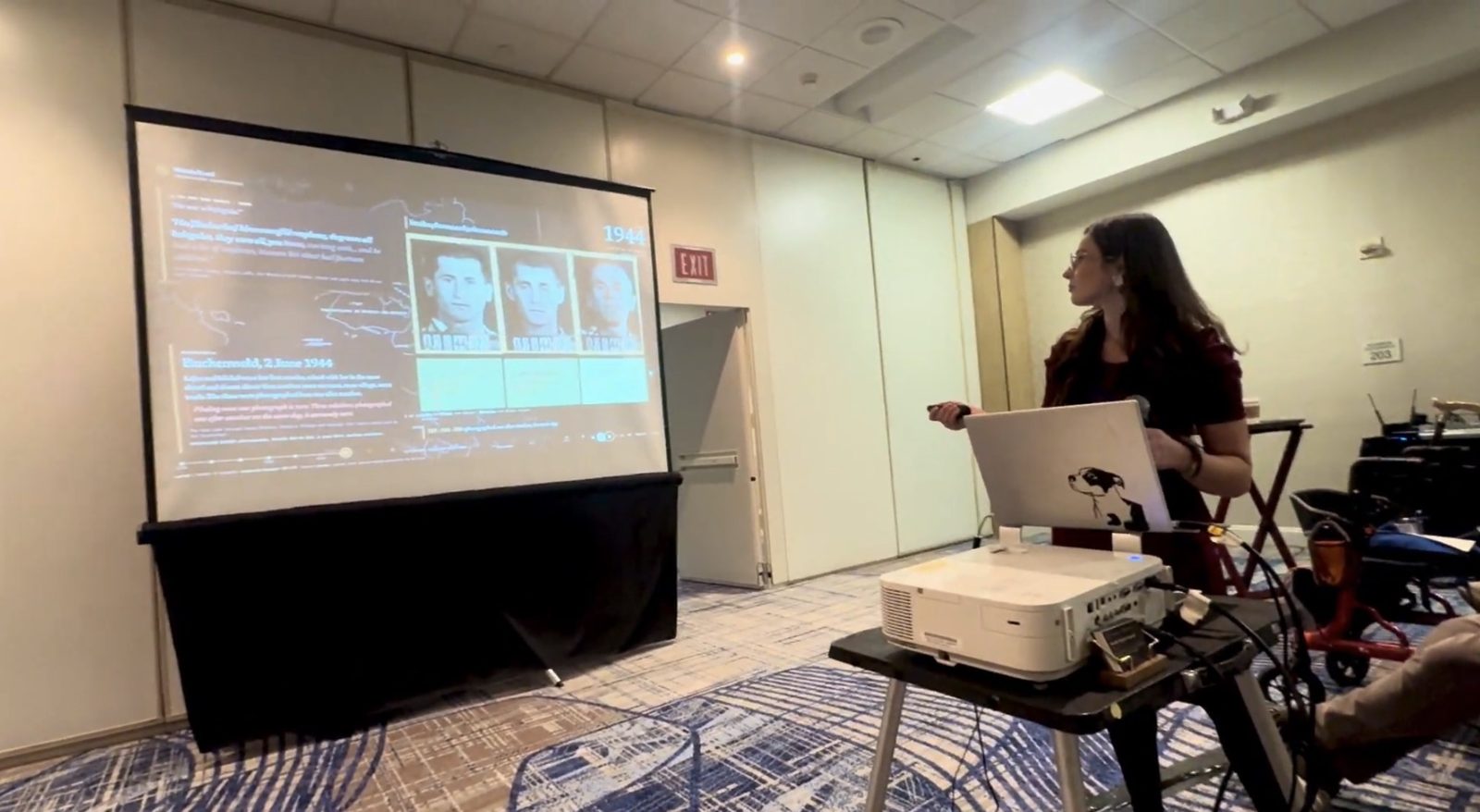
Three minutes from the workshop co-presented with Jude Richter (USHMM), Philadelphia, 24 October 2026.

2026

  1. Sept
    Indersdorf identifications accepted by the group’s historians, Anna Andlauer and Shoshan Porat.
  2. Oct
    The National Archives in Prague sent its own scans and written consent to publish them (NA-5701-2/03-2026).
  3. 24 Oct
    Workshop at the World Federation of Jewish Holocaust Survivors and Descendants, Philadelphia, co-presented with Jude Richter (USHMM). Moderated by Dan Schwarz, Ph.D.
  4. 24–25 Oct
    Exhibition table at the same conference, with Helen’s Road, posters and the records, and a “Present and Connect” talk.

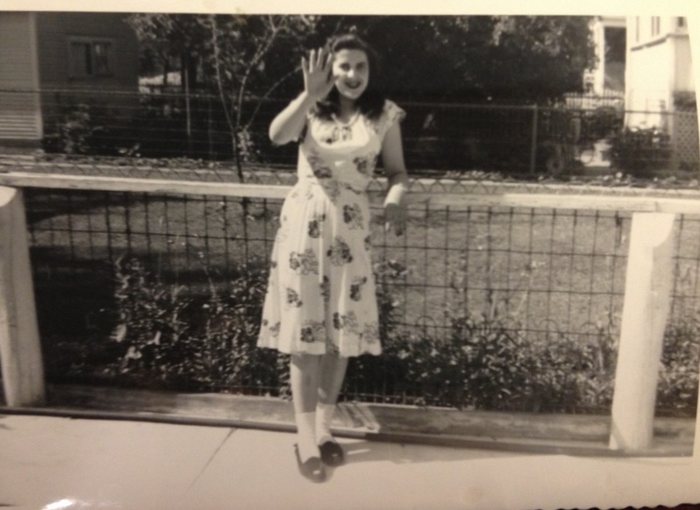
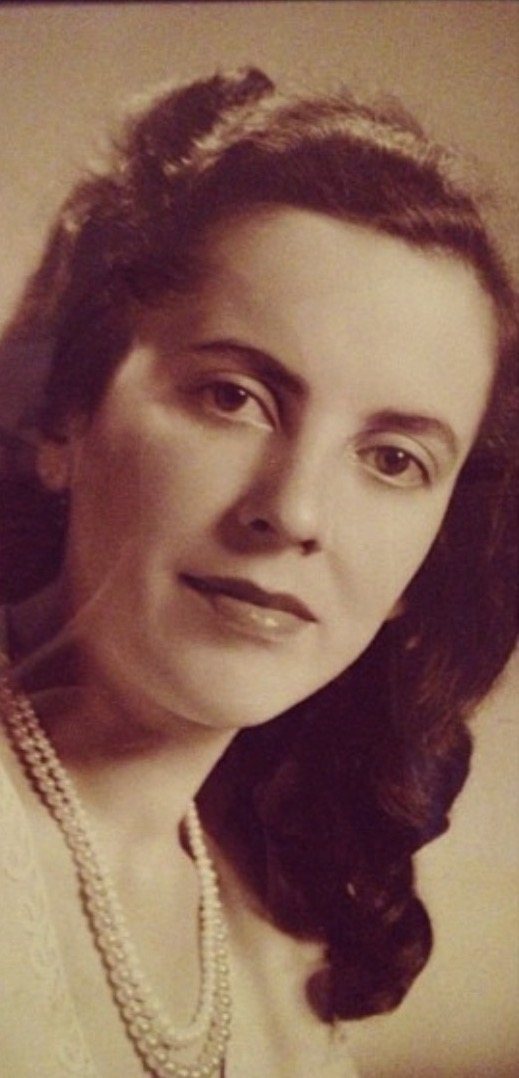
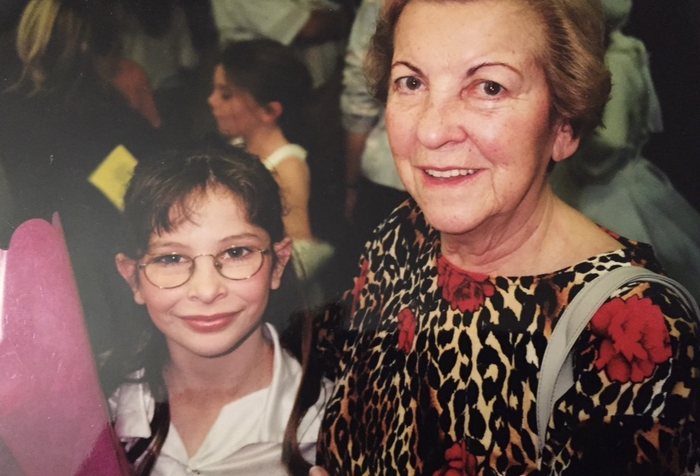
Helen, 1929 to 2013

She was my grandmother, and she helped raise me. These are some of the few photographs of her life after the war.

Helen, 1946Indersdorf · Charles Haacker
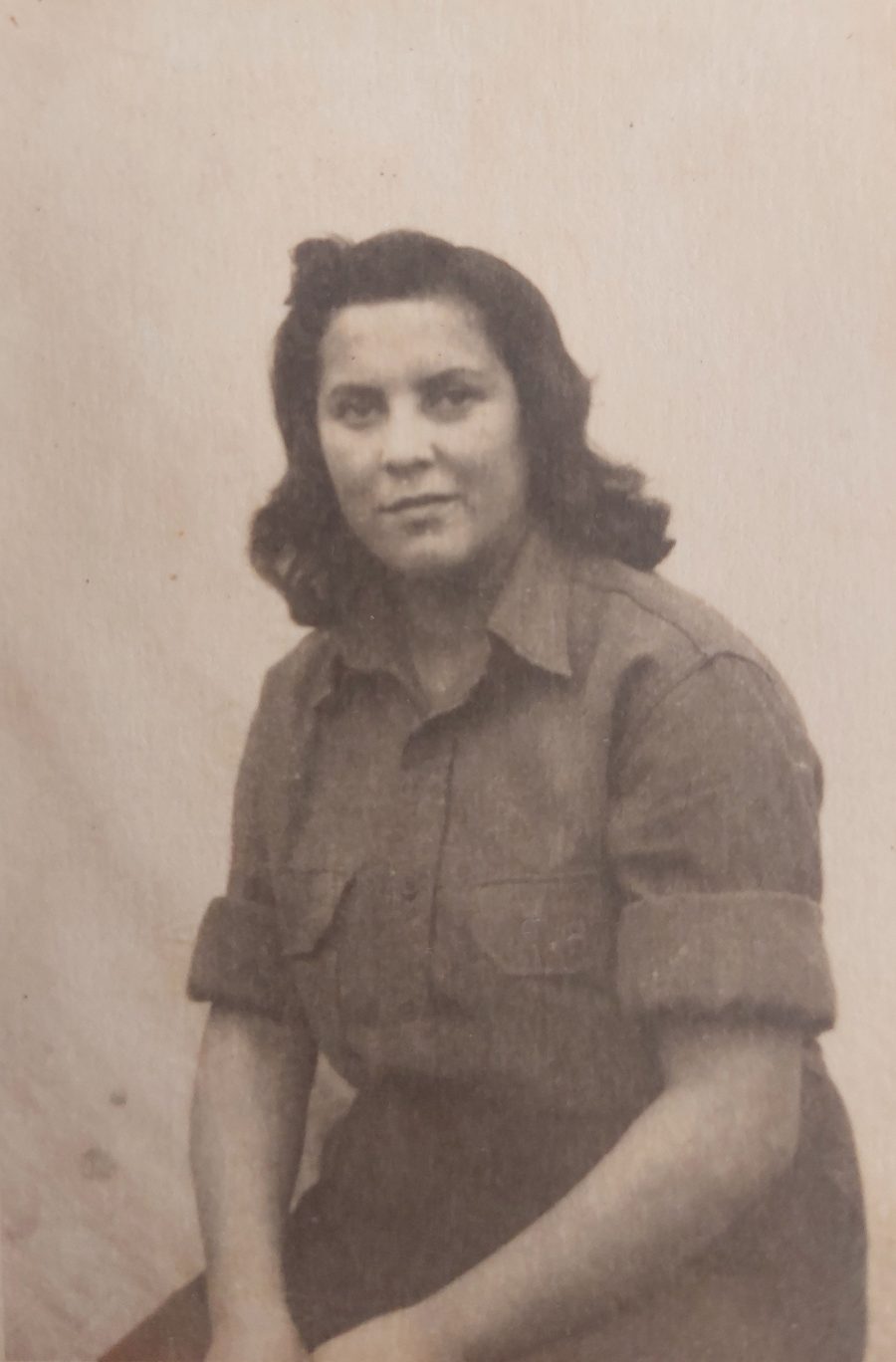
Helen as a teenager, a portrait taken at Kloster Indersdorf, 1946
Helen at Indersdorf, Germany, 1946. Photo: Charles Haacker.
Helen · 1929 to 2013
Helen at Kloster Indersdorf, 1946, with her friend Ibi Weinberger
1946Indersdorf, Germany, with her best friend Ibi Weinberger (middle)
Helen in Chicago, 1947
1947Chicago, USA
Helen, studio portrait, 1950s
1950sStudio portrait
Helen with her granddaughter Sam, 2000
2000With her granddaughter Sam
Helen with her granddaughter Sam, 2010
2010With Sam

“We all have stories to tell. You know, all of us have some kind of story to tell.”

Helen Lando Helman, speaking at the Orange County High School of the Arts, about 2002

Work with me

Also: introductions to archives, museums, schools and documentary makers who want families found or their staff trained, and shared projects with institutions that hold records families can’t yet read.

Services and ratesContactsam@engineeringremembrance.org

What’s next

Balagula

Reads the handwritten records that stop most searches, so families get the method without years of language work. In development; the wait list is open.

Archive Detective in classrooms

The game, brought into schools that teach the Holocaust through real records.

Training for institutions

Archive and museum staff using AI with Holocaust-era records, and checking every answer against the page.

Bio and downloads

Samantha Seligman-Grajewski is a third-generation researcher bringing data methods to Holocaust genealogy, and the founder of Engineering Remembrance. She works in process engineering and is completing an M.S. in Chemical Engineering at Stanford. Starting from one Buchenwald card, she recovered her grandmother Helen’s family from 2,008 records in 26 archives and databases, in 12 languages. In October 2026 she co-presented a workshop with Jude Richter (USHMM) at the World Federation of Jewish Holocaust Survivors and Descendants conference in Philadelphia.

Download the headshotDownload the table photoThe one-page handout (PDF)The recommended library

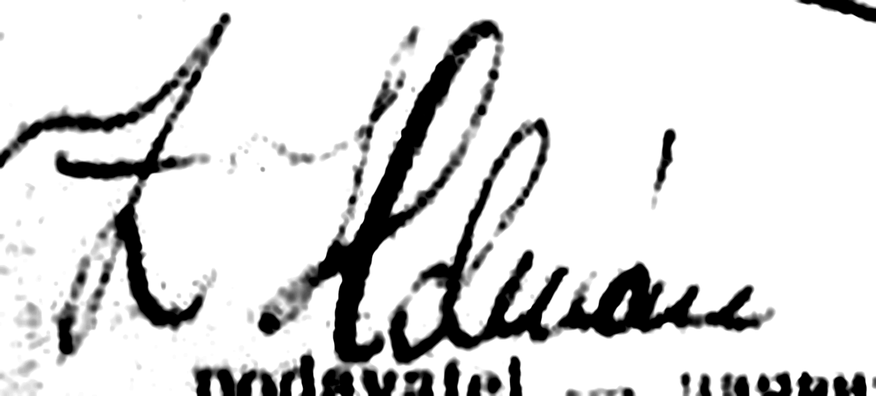
The signature of Zacharias Helman
Zacharias Helman · Buchenwald registration form, 2 June 1944 · Arolsen Archives

In her own voice

“We all have stories to tell. You know, all of us have some kind of story to tell.”

Helen Lando Helman, speaking at the Orange County High School of the Arts, about 2002